New - 4 Hours Ago


$1,175,000
Active
3
Beds
2
Baths
2090
Sqft
0.3552
Acres
16 Wing Shell Ln, Hilton Head Island, SC 29926
MLS#: 512948


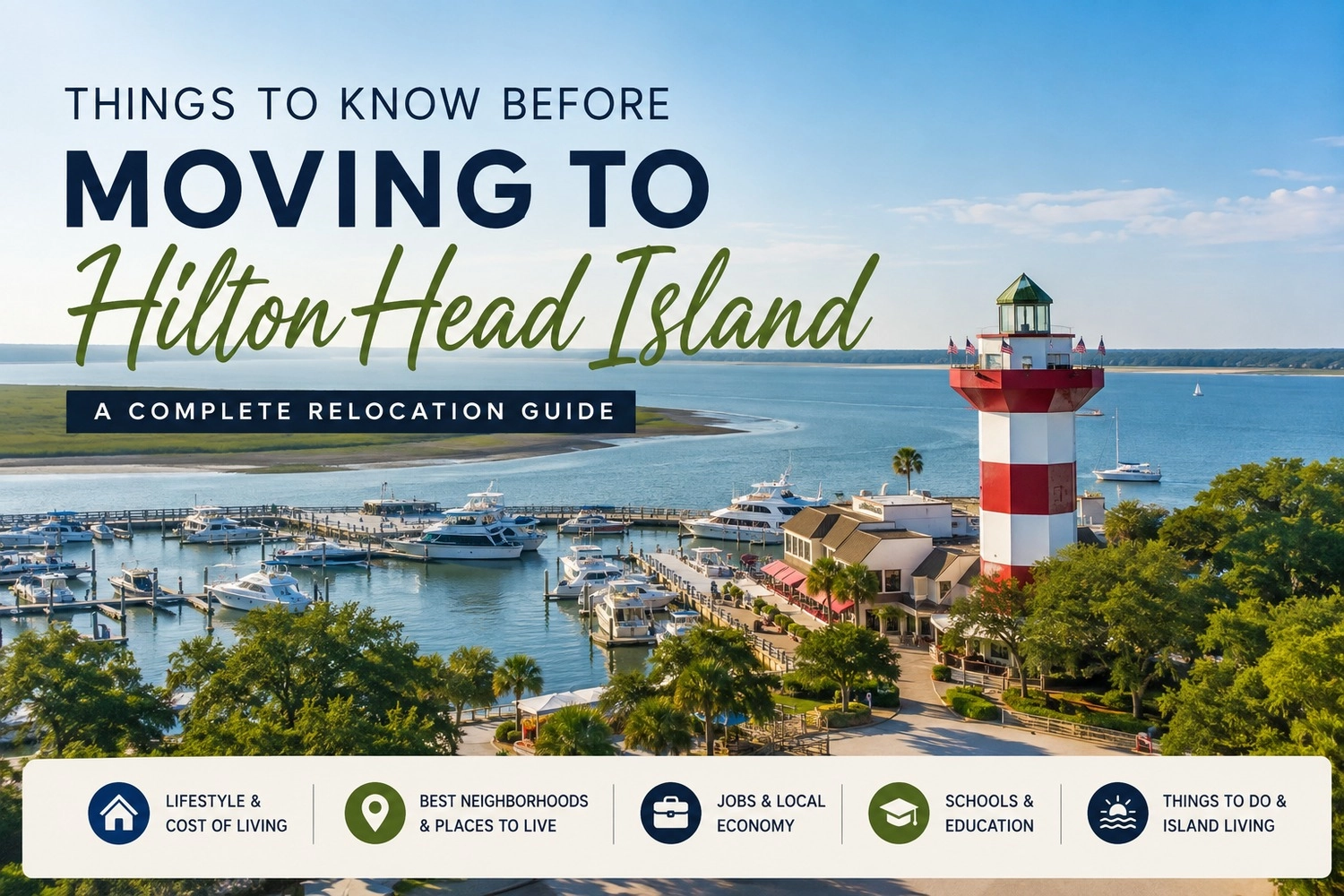
Moving to a new community is a major decision, especially when you're considering a destination as distinctive as Hilton Head Island. Known for its beautiful beaches, outdoor lifestyle, golf courses, Lowcountry scenery, and relaxed atmosphere, Hilton Head Island attracts retirees, families, remote workers, and people looking for a change of pace.
But before packing your bags and making the move, it's important to understand what everyday life is actually like on the island. From housing and taxes to traffic, weather, employment, schools, and the cost of living, there are several factors to consider.
This complete relocation guide covers the essentials you should know before moving to Hilton Head Island.
Hilton Head Island is located in South Carolina's Lowcountry, between Savannah, Georgia, and Charleston, South Carolina. The island is known for its miles of beaches, maritime forests, lagoons, golf courses, and carefully planned residential communities.
Unlike some traditional beach destinations that are primarily focused on tourism, Hilton Head has established residential neighborhoods and year-round residents. This gives the island a strong community feel while still offering many of the amenities people expect from a popular vacation destination.
One of the biggest attractions is the lifestyle. Residents can spend their free time walking or biking along the beach, playing golf or tennis, boating, fishing, kayaking, or simply enjoying the natural surroundings.
However, the island's popularity also means that life can feel very different depending on the season. Understanding the difference between the busy tourist months and quieter parts of the year is important before deciding whether Hilton Head is right for you.
One of the first questions potential residents ask is whether Hilton Head Island is affordable.
The answer depends heavily on your lifestyle and housing choice. Housing can represent a significant portion of the overall cost of living, particularly if you're looking for a home close to the beach, a property in a highly desirable community, or a home with amenities such as a pool or golf-course views.
In addition to the purchase price or rent, prospective homeowners should consider:
If you're purchasing a property, don't focus only on the listing price. Ask for an estimate of the property's complete monthly and annual carrying costs.
For example, two similarly priced homes can have very different ownership expenses depending on their insurance requirements, HOA fees, age, construction, location, and amenities.
Hilton Head Island offers a diverse range of real estate options, including single-family homes, villas, condominiums, townhomes, and luxury properties.
You may find homes in communities designed around golf, waterfront living, or access to recreational amenities. Some properties are located within gated communities, while others offer easier access to shopping, restaurants, beaches, and everyday services.
When searching for a home, think beyond the number of bedrooms and bathrooms. Consider what type of lifestyle you want.
If you're considering purchasing a property as both a residence and an investment, pay particular attention to rental rules. A property that appears attractive for vacation rentals may have restrictions that affect its potential use.
Not every part of Hilton Head Island offers the same experience.
Some neighborhoods provide a quieter residential environment, while others put you closer to beaches, restaurants, shopping, golf, and entertainment.
Before choosing a neighborhood, consider what matters most to you.
If you want easy beach access, you may prioritize properties within walking or biking distance of the ocean. If you're looking for a quieter environment, you might prefer a neighborhood farther from the busiest tourist areas.
Families may want to prioritize school options and access to everyday services. Retirees might focus more heavily on healthcare, recreational opportunities, walkability, and proximity to friends and social activities.
The best neighborhood is ultimately the one that fits your daily routine—not simply the one that looks best in a listing.
Hilton Head Island experiences noticeable seasonal changes in population and activity.
The island can become significantly busier during popular vacation periods. Beaches, restaurants, roads, and attractions may see increased activity, particularly during the spring and summer.
For full-time residents, this can be both a benefit and a challenge.
The increased activity means more restaurants, events, entertainment, and opportunities to meet visitors and seasonal residents. At the same time, traffic and crowds can make everyday errands take longer.
If you're considering relocating, visit Hilton Head during both a busy season and a quieter period if possible. Experiencing the island at different times of year can give you a much more realistic idea of what year-round life will be like.
Hilton Head Island has a warm, humid climate with hot summers and relatively mild winters.
If you're moving from a colder part of the country, the winters may be one of the biggest attractions. Snow and prolonged freezing temperatures are uncommon compared with many northern states.
However, summer weather can be hot and humid. You'll also need to be comfortable with the possibility of tropical storms and hurricanes along the South Carolina coast.
Before buying a home, understand how the property is designed to handle coastal weather. Ask about:
These considerations can have an important impact on both your comfort and your long-term homeownership costs.
Living on a coastal island comes with unique responsibilities.
Not every property has the same level of exposure to flooding or storm-related risks. Even properties that are not directly on the water may have different insurance requirements depending on their location and elevation.
Before purchasing, review the property's flood zone, insurance requirements, drainage characteristics, and history of storm-related issues.
It's also smart to understand local evacuation routes and have a plan for securing your home and belongings during severe weather.
Your real estate agent, insurance professional, and local authorities can help you understand the risks associated with a specific property.
Hilton Head Island is relatively easy to explore by car, bicycle, or on foot depending on where you live.
Biking is particularly popular, and many communities have pathways that make cycling a convenient way to reach beaches, parks, restaurants, and other destinations.
However, traffic patterns can change considerably during peak tourism periods.
If you commute off the island, work in the surrounding area, or regularly travel to Savannah or Charleston, consider the time involved in crossing the bridges and navigating seasonal traffic.
Before choosing a home, test your potential commute during the times you'll actually be traveling. A route that looks short on a map may take considerably longer during busy periods.
Families moving to Hilton Head Island should research local schools before choosing a neighborhood.
School options, attendance boundaries, transportation, extracurricular programs, and educational approaches can vary, so it's important to evaluate the options based on your family's specific needs.
Don't assume that two neighborhoods close to one another necessarily have identical school arrangements.
If schools are an important consideration, verify current attendance boundaries and school information directly with the appropriate local school authorities before purchasing a property.
Families should also consider access to parks, sports programs, childcare, libraries, healthcare, and other services that affect everyday life.
Healthcare access is another important factor when relocating.
Hilton Head Island and the surrounding region provide access to medical providers and healthcare facilities, but your options may depend on the type of care you need.
Before moving, identify:
Retirees and people with ongoing healthcare needs should pay particular attention to the distance to specialists and hospitals.
Hilton Head Island's economy is strongly connected to tourism, hospitality, real estate, healthcare, retail, and other service industries.
If you're relocating for work, research employment opportunities before making the move.
Remote workers have additional flexibility, but should still consider internet availability, home-office space, and whether their preferred neighborhood provides a comfortable environment for working from home.
If you're moving after retirement, employment may be less important than access to recreation, healthcare, shopping, restaurants, and social activities.
One of the biggest advantages of living on Hilton Head Island is the opportunity to spend more time outdoors.
Residents can enjoy:
The island's natural environment is one of its defining characteristics.
If outdoor recreation is an important part of your lifestyle, consider how close your prospective home is to the activities you enjoy most.
A major part of the Hilton Head lifestyle comes from its residential communities.
Some neighborhoods offer extensive amenities, while others provide a simpler residential setting. Community fees and rules can vary considerably.
Before purchasing in an HOA or planned community, review the governing documents carefully. Pay attention to:
Understanding these rules before purchasing can help prevent unpleasant surprises later.
Not everyone moves to Hilton Head Island permanently.
Some homeowners use their property as a primary residence, while others split their time between Hilton Head and another location.
Your intended use of the property can significantly affect which type of home and neighborhood makes sense.
A full-time resident may prioritize storage, a home office, proximity to healthcare, and everyday convenience.
A second-home owner may place greater emphasis on maintenance, security, rental potential, and property management.
Think about how you realistically expect to use the property before beginning your search.
If you're unfamiliar with Hilton Head Island, consider renting before purchasing.
Spending several months on the island can help you determine whether you enjoy the climate, seasonal changes, traffic patterns, community atmosphere, and pace of life.
It also gives you an opportunity to explore different neighborhoods before committing to a specific location.
A short vacation can show you what Hilton Head is like as a visitor. Living there for an extended period can show you what it's like as a resident.
When creating your relocation budget, remember that the purchase price is only one part of the financial picture.
Potential expenses can include:
If you're moving from another state, also consider travel costs, moving services, storage, vehicle transportation, and other relocation expenses.
A detailed budget will give you a much better understanding of what you can comfortably afford.
Pictures and online listings can only tell you so much.
Before purchasing a home, spend time exploring the island like a resident rather than a tourist.
Drive through neighborhoods during different times of day. Visit grocery stores. Test your commute. Explore restaurants outside the main tourist areas. Visit beaches at different times. Check how long it takes to reach healthcare facilities and other services.
These small experiences can help you determine whether a particular neighborhood fits your lifestyle.
A local real estate professional can provide valuable insight that isn't always obvious from an online listing.
They can help you understand differences between neighborhoods, community restrictions, property types, insurance considerations, market conditions, and other factors that may affect your purchase.
If you're moving from another state, working with someone who regularly helps relocating buyers can also make the process much easier.
A knowledgeable local agent can help you narrow down properties based on your budget, lifestyle, preferred location, and long-term plans.
Hilton Head Island offers an appealing combination of coastal scenery, outdoor recreation, community amenities, and a relaxed Lowcountry lifestyle. For many people, the opportunity to live near the beach while enjoying year-round recreational activities makes the island an attractive place to call home.
However, relocating to a coastal community requires more than falling in love with the scenery. You'll want to carefully evaluate housing costs, insurance, weather, traffic, schools, healthcare, community rules, and your preferred lifestyle.
The best way to decide whether Hilton Head Island is right for you is to experience the island firsthand and take the time to explore different neighborhoods.
With thoughtful planning and the right local guidance, you can make a more informed decision and find a Hilton Head Island home that fits both your lifestyle and your long-term goals.


